When I first began my spiritual journey–what I would eventually rename my self-discovery journey–there was a LOT of knowledge and wisdom that I gained that I didn’t previously possess. Things like understanding that needs are different than wants, unconditional love is not codependency love, masking is not authenticity, there are laws that govern our world that we can gain insight into, tap into and use for our own personal growth and probably the biggest insights are the ones I’ll discuss today. I discovered that it is our met needs, skill set and Emotional Tool Box that truly define whether we survive or thrive. The less needs, skills and tools we have in our Emotional Tool Box, the more we will struggle to cope, manage stress and have healthy relationships with ourselves and others.
NEEDS
What if I told you that every time we react, snap, lose our patience, feel resentment, become angry, worry, panic, or otherwise lose our ability to manage our emotions it is because one or more of our needs is not or has not been met? What if I told you whether we are neurodivergent or neurotypical, disabled or not disabled that unmet needs are the cause of all suffering. If a neurodivergent person melts down, it my be because their need for sensory balance was not met and their meltdown is the effect of not having sensory balance and not having sensory balance before the meltdown is the result of both the neurodivergent AND their environment not having this understanding or ability to accommodate it. It is often our beliefs about our involvement in the support needs of others that also causes us to react. Instead of admitting that we are the wrong person for the job, we repeatedly attempt to meet needs we cannot meet. And in our defense, we live in a society where we do not have a paradigm in place that enables people to pick up the phone and say that they are the wrong person for the job and need assistance.
Needs are things that we cannot live without. The more needs we have met, the more we thrive. The less needs we have met, the more we become trapped in survival mode. Period. Needs are the defining factor in the degree of thriving we experience. It is my belief that the only way to shift our society’s current state is to acknowledge the necessity of meeting everyone’s needs. And this includes restructuring our entire social paradigm including family structures.

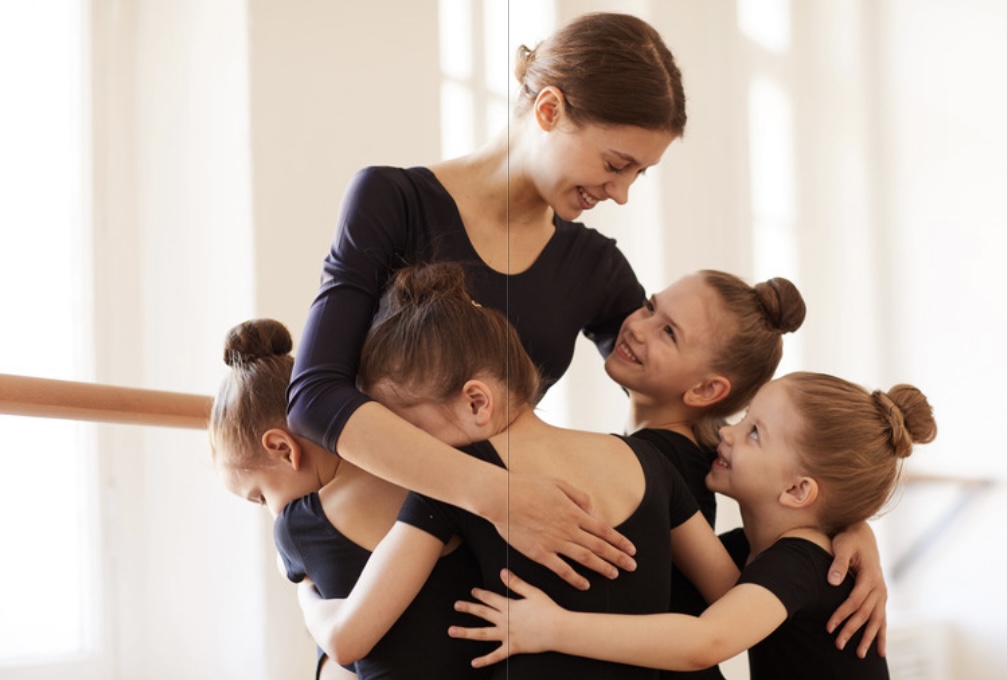
Oftentimes, a family member is not capable of meeting child or partner’s need. Many needs require an outsider meeting the need. I’ve taught dance for over 30 years and can tell you that my ability to meet the needs of my students was something that their parents could not do. It was because of me and my passion for dance and dance education that my students not only got their needs met, but FELT their need being met from my LOVE of meeting that need! Needs are so much more than healthy drinking water, nutrition, hygiene, medical care, sleep and shelter. Unmet needs can be seen in any behavioral struggle, social degradation, relationship implosion and many mental illnesses. Where there is pain, there is an unmet need.

Our current social paradigm illustrates its belief in what human needs are. These beliefs can be seen in our education system, in our capitalistically driven paradigm, in our corporate and financial systems and even in our judicial system. Our society holds a belief that best learning takes place in a curriculum-based classroom, that “go to school, get good grades, attend university and acquire a stamp of approval career with a 401K program” is the most acceptable path to follow and an eye for an eye continues to be the only way of justice. In one hundred years, we have not evolved at all in any of these areas. In spite of all the research and knowledge available to the contrary of wellness in these areas, these practices continue to rule our society. And simultaneously mental illness continues to increase. Furthermore, we continue to assume that in the home is where children will receive their emotional and social educations. We have no long term proven program in place to mediate any obvious absence observed in children. Instead, we simply label these children and set them on behavior management path or special education course instead of seeing that the child is simply presenting with the symptoms of unmet needs–that if someone capable of seeing the child clearly were to come in and perceive the child and propose an entirely different programming that after implementation, the child’s “symptoms” would disappear and an entirely new presentation would surface. We tend to categorize people while promoting inclusion and then deny that the very programming we have in place is contradictory.
NEEDS REQUIRED TO THRIVE
Here is a list of examples of needs. Our needs should be NON-NEGOTIABLE in our society. We have enough understanding now to KNOW with high certainty that when needs are not met that destruction in some way is the result. Our current educational models are NOT capable of meeting everyone’s needs. Individual households are NOT capable of meeting everyone’s needs. (Most parents have yet to get their own needs met, let alone meet their children’s needs). The result of unmet needs can be seen in our crime, in wars, in corruption in high places, in pain and suffering, in skyrocketing poverty and more. Here is a starting point list to give you an idea of the scope and sequence of our needs.
- Fresh air
- Hygiene
- Warmth
- Clean drinking water
- Connection
- Companionship
- Belonging
- Exercise
- Safety (Shelter and protection from harm)
- Financial security (cash flow sufficient to meet basic needs)
- Holistic education (emotional, social, cognitive, physical, spiritual, financial) this includes character development, emotional and social intelligence development, self-connection and self-care development, self-discovery and personal empowerment development, coping & stress management skills, critical thinking & higher ordering thinking skills & logic, etc.
- Wellness, nutrition & healthcare
- Progress, growth & development
- Functioning levels matching support needs (and individuals with the perception to see those functioning levels and support needs)
- To be seen, heard, accepted, wanted, loved, known
- Self-expression, voice, advocacy
- Opportunity & experiences (specifically in areas of interest and natural talent to develop skills and tools which can be used to self-care and mature in one’s ability to transition to meeting own needs)
- Nurturance
- Healthy role models and guidance
- Purpose, direction & fulfillment
- Agency & freedom of choice as well as education in informed decision making
- Interest, curiosity, desire & motivation (self-initiated learning is the only TRUE learning there is)
- Healthy mindset
- Integrity & authenticity (freedom and safety to be one’s self)
- Healing
- Healthy, safe living environment with emotional stability (including non-traumatic intervention)
- Aspirations, goals, objectives
- Faith & hope in something bigger than oneself
- Life skills & life management skills
- Joy
Suffering is often found in the absence of joy, hope or faith–in the doubt of security.

SKILLS
Skills are defined in our society as the things we acquire along the way through a process of intention, repetition and application. There are basic skills that the majority of us possess (and too often take for granted) such as walking, talking, grasping with fingers, breathing, digesting, etc.) and then there are skills that get developped over time such as cleaning, cooking, mechanics, reading, computation, patience, tolerance, etc. The more skills we possess, the more opportunities we will have access to while the less skills we possess, the more limited we will be in opportunities. Our personal skills are the sum total of our aptitudes, abilities, knowledge, passion driven knowledge, special interest expertise, expertise, education, experiences, talents, gifts, developed talents & gifts, strengths, wisdom, vocational and professional training, life skills, character development, emotional intelligence, social intelligence, maturity, strength of character, and more.

If I am a company seeking after digital marketing assistance, I am not looking at someone’s educational background or their list of past companies worked. Instead, what I am most interested in is their skills and success using that skill set. For example, how many other platforms have they built applying digital marketing and what was their success rate. It is skills that open doors for us, not education or human right.

Society decides what skills are valuable. The sheer innocence and presence of an individual categorized as “severely disabled” is its own skill. To the person seeking to gain presence and free oneself of the constant thinking and worrying can benefit from spending time with someone seen in our society as “severely disabled.” Unfortunately, currently, our society does not value presence or innocence as much as productivity, commerce and materialism. This can be seen in the compensatory system of disability payment.

The truth is, skills are the sum total of abilities we use to tell our stories. The most valuable skill we possess is our personal story–the raw and authentic experience we’ve had on this earth–the point of view only we possess. It is through this point of view that we can weigh programming to determine the effectiveness of it. Only once we can create programming that supports the needs of the all can we deem a system effective. And TRUE accommodations involve implementing the support need for all where they are at, providing a means to activate that voice and tell that person’s story and share that unique point of view as best we can. Therefore, the greatest skill a person can possess is the skill of consciousness and awareness–the ability to see clearly and witness the equal value in all living things and understand how each is interconnected, on how we need everyone and everything to truly understand the most important things like love, holistic wellness and individualized programming that wholly meets the needs of all. Only once everyone is moving forward can we all move forward.

EMOTIONAL TOOL BOX
Not all of us are capable of understanding things like emotions and socialization. For those of us who are capable of understanding these things, it is us who need the Emotional Tool Box most. When we are unconscious of truth, we tend to suffer from disappointment, discouragement, doubt, fear, stress, overwhelm, regret, resentment, envy, etc. Truth would tell us that we are different than everyone around us including our parents and children. What we need is different to what they need which means that while they may need to have more educational opportunity and experiences, we may need more nurturance and emotional support. As we tune in to ourselves and our feelings we begin to discover what things we need and what absence of these things is causing in our lives. We gain insight into the necessity to prioritize meeting these needs. As we understand these things, we grow our Emotional Tool Box. With each struggle and challenge, we come out the other side with more knowledge, wisdom and understanding which simultaneously gives us better coping skills, stress management skills and emotional regulation. It is through the process of living that we increase our Emotional Tool Box and become aware of the importance of it. Here is a list of tools that should be in everyone’s Emotional Tool Box or in the Emotional Tool Box of those supporting someone who cannot meet these needs for themselves.
EMOTIONAL TOOL BOX EXAMPLES
- Emotional identification
- Emotional management
- Emotional processing
- Social identification
- Social management
- Social processing
- Coping skills
- Stress management skills
- Anger management skills
- Self-reflection skills
- Self-monitoring skills
- Emotional regulation
- Emotional independence
- Inner security
- Confidence
- Self-worth
- Self-value
- Courage
- Strength of character (temperance, patience, resilience, tolerance, understanding, acceptance, non-judgment, kindness, empathy, compassion, etc.)
- Self-management
- Self-governance
- Self-initiation & self-propelling
- Self-advocacy
- Intuition & perception
- Mindfulness
- Consciousness
- Self-awareness
- Other awareness
- Healthy boundaries

HOLISTIC WELLNESS
Holistic wellness is the result of development and progression of all the parts that make up our whole. The more developed and progressed these parts of ourselves are, the more emotional stability, wellness and thriving we will experience. The less developed and progressed these parts of ourselves are, the more emotional instability, mental illness and survival mode living we will experience. As we begin to recognize this and observe these patterns in our own lives, we gain personal power to slowly gain new education and implement changes that if kept consistent will contribute to radical growth and progress eventually shifting our life experience to one of emotional stability, wellness and thriving.
We cannot go zero to one hundred though. We must be willing to accept where we are and begin our journey from where we are. What is more, we must come to understand that we only have the power to implement these choices and changes in our own lives and influence those through our example. In the current societal paradigm we are experiencing, a lot more self-teaching and personal efforts is required, but the more of us that make this courageous choice, the easier it will become for future generations and for those that are unable to engage in this work. We are the pioneers of this movement we call consciousness and the choices we make today will shape the world our children and grandchildren live in tomorrow.

What needs, skills or tools do you have that are met and unmet? How do your unmet needs contribute to the things that you struggle with?
Much Love!







 Self Discoverly