
If you’ve ever heard the phrase, “This too shall pass,” then you may be able to grasp emotional processing. When we process our emotions, we let them flow through us without resistance so that we can release them. When we manage our emotions, we see them as something unruly in need of being tamed or as something too big to truly experience in the moment. From a simple definition perspective, this is the difference between emotional management and emotional processing. Emotional management is taming the big emotions so that they do not become out of hand and lead to projection, defensiveness, offensiveness, self-harm or self-destruction. Emotional processing is accepting and allowing our emotional experiences and emotions to flow through us and releasing the cause leading to the emotional experience. When we process our emotions, we find the cause and uproot it never to be triggered by it again. Emotional management is what we reach for when we are unable to process our emotions.
UNDERSTANDING EMOTIONAL MANAGEMENT

Emotional management has many names. Coping, stress management, behavior management, riding out the storm, surviving… When we manage our emotions, we seek to get through whatever challenge we might be having. In the moment, we do not have a belief that we can process our emotions and free ourselves of the cause behind the emotion, so we simply seek to manage the situation. It’s kind of like when we have young toddlers running around our house. That is not the time to tidy our home and stage it for a viewing. Instead, we simply manage the situation. We keep the toddlers alive, we keep potential dangers out of reach, we give them toys and things to occupy them and accept the mess in exchange for happy toddlers. When we are on active toddler duty, we are likely not focusing all our attention on work, on household tasks, etc. And so it is with emotional management. If I get really bad news from work, but I’m about to pick up my two kids from school, melting down or losing it has to wait. And so, I manage my emotions by distracting myself, grabbing a coffee, or just thinking about something else. I suppress the emotions in that moment. Emotional management is what we use when we do not believe that we can experience our emotions fully in that moment and let them flow and release the cause behind the emotion or emotional experience. When we temporarily suppress our emotions, then feel and release them when the time is right, this is healthy emotional management. When we suppress our emotions and refuse to feel or release the causes and instead let the unfelt emotions and emotional experiences build, this is unhealthy emotional management.
UNDERSTANDING EMOTIONAL SUPPRESSION

Sometimes we suppress our emotions only temporarily while we get to safe place to feel them and other times we suppress them for years and years! The problem with doing this is that over time emotional suppression causes emotional sickness. Every emotional suppression causes another layer over a previous emotional suppression. What we must understand about emotional layering is that the only emotion we can process is the one on top. This means if we put off feeling and releasing an emotion and choose to suppress it and then a new emotional experience comes along that we too choose to suppress, before we can process the first emotional experience, we have to process the new one. Emotional layers build and to access lower layers, we have to peel away top layers. If we have a chronic habit of suppression, you can see right away that the clean up job of this is going to be massive when we finally decide to feel and process our emotions! Liken it to a leaf clean up on an acre property surrounded by trees. If we wait four autumns to do that leaf clean up, it’s going to be significantly more involved than if we just did an annual leaf clean up. Our emotions are no different! Suppressing our emotions is not avoiding them. We may be able to deny them and temporarily forget about them, but every time we are triggered and experience a trigger response, that triggering is because of an emotional experience or emotion that we chose to suppress!
Unconscious emotional suppression is the worst kind of emotional suppression because we do not even know we are doing it. As children, we learn emotional management and processing skills and unconsciously we adopt these skills and for many of us never realize that we are engaged in these behaviors so never wake up to become aware that they are learned behaviors. So for most of us, when we begin the process of self-discovery, awakening and emotional processing, we are faced with a really, REALLY big clean up job. When we look at it this way, we can understand why we reach for emotional management or coping mechanisms instead!
COPING MECHANISM EXTREMES

Depending on the level of emotion, different emotional management tactics come into play. For the average person who may have had some life disappointment and hurt may manage their emotions by reaching for sugar when they are stressed or getting busy when faced with big emotions, but for the person who has a lot of trauma, the pain that is experienced may be more severe and so after exhausting all the average emotional management tactics sadly seen as normal–caffeine, sugar, salt, avoidance, denial, etc.–we may see some turning to addictions like drugs, alcohol, sex, gambling, excessive spending, etc. If we can understand that ALL emotional management is an attempt to distance oneself from emotions, we can understand that nobody wants the addiction. What people want is RELIEF from feeling! It is the seeking of relief that sometimes leads to addiction. But addiction itself is sought by no-one. Until we understand this as a society, we will not change how we look at addiction and therefore change how we treat it. If people knew how to process their emotions and that there was a light at the end of the tunnel FROM doing it, there would be a LOT less addiction in our world. Addiction continues to exist because people do not know and therefore when faced between pain and relief, they reach for relief. Furthermore, because we live in a society where suppression, denial, self-deception, avoidance and resistance is the norm with work and 95% of the population is in survival mode, we simply view emotional management as how we regulate our emotions. On top of that, the level of survival mode that we are in as a whole sadly leaves very little opportunity to choose emotional processing over emotional management.
THE TRUTH ABOUT EMOTIONAL REGULATION

When we regulate our emotions, we step out of fight, flight, freeze mode. We pull ourselves back to neutral before triggering. Emotional regulation is not emotional processing. When we process our emotions, we gain understanding about what the cause of our emotions and can then with understanding believe in our ability to allow the emotion to flow until it passes through us. The reason that it feels like there is no end to emotional processing when we give this a try is because we have layers upon layers of unprocessed emotions within us and so, similar to emptying a 24 foot swimming pool, it will feel like the process is never going to end! This is why emotional management and emotional regulation are even a thing. If we were all taught about emotional processing from birth and our society was built in a manner where everyone just felt their emotions in the moment and let them flow, there would be no addiction, no coping, no managing stress, no stress at all! The truth is that we are faced with regulating our emotions and managing them because we live in a society that demands our emotional suppression and shut down in order to accommodate its needs and wishes. What we are most coping with is the expectation to engage in things like emotional management and emotional regulation–which of course expect us to suppress and shut down our emotional experiences to make another feel safe and comfortable. The expectation of emotional management is ALWAYS about accommodating another!
UNCONSCIOUS IMPRISONMENT

We are living in an age where we believe that slavery has ended. We believe that concentration camps will never be a thing again in “democratic” countries. We believe that democratic countries actually have freedoms. This could not be further from the truth! True freedom–EMOTIONAL FREEDOM–is when we have complete autonomy over our time, energy, and choices. That means that when we are truly free, we awaken each day to abundant access to nutritious food, clean water, a safe shelter, ideal temperature control, every other basic need as well as opportunity. We also awaken to complete choice over how we spend our time and energy. This means that we are not bound by a schedule, having to rush around to get kids to school and ourselves to work. We can pursue passions and interests, explore, and basically follow after our own curiosity and feelings. Rare is it to have a human being having this lifestyle and experience. This is because an individual would have to be raised with this mindset and conditioned to the skills, tools, and knowledge to align one’s life in this way. For the majority, we were sent to school and conditioned to become workers for the 1%. Rockefeller himself once said that he was creating school so the 1% could have workers. And so, step one of this massive undertaking of emotional processing is to awaken to the reality of the world we are living in. Until we can see our reality clearly, we can not possibly see our options.
THE OPTIONS

Option one is to stay asleep and radically accept your own reality whatever that is including the ebbing and flowing of emotional regulation and emotional management. Option two is to awaken to reality, accept the self-discovery journey and choose emotional processing over emotional regulation and emotional management. We cannot choose to awaken without also choosing the self-discovery journey though. Once our eyes are opened, they can never be closed again!
PART OF THE JOURNEY

Something that I learned on my own road of self-discovery has been that love capacity and emotional management and emotional processing abilities go hand in hand. If we do not know what true love or real love or unconditional love or authentic love or whatever term we want to use to capture this kind of freely given love without conditions, then we will not grasp the benefit of choosing a self-discovery or emotional processing journey. The difference between emotional management and emotional processing is also to do with perception. If I believe that there is no benefit to processing my emotions–that love will be at the end of the tunnel, for example–I will not feel enough motivation to engage in this feat.
TWO KINDS OF LOVE

When we feel loved and love without conditions we understand the concept of needs. We come to realize that no human can survive without their needs being met. Furthermore, we understand that when another human being engages in unloving behaviors, addictions or unhealthy emotional management, they do so because they are attempting to meet their needs, not to deliberately harm me. And, the behaviors they are engaging in are the only things that they have belief in. When we have perception of unconditional love or real love or authentic love, we have agency. We have free will or personal choice. We can choose between engaging in unloving behaviors, addictions or unhealthy emotional management or we can choose love. Until we have the perception of two polars of love, we lack autonomy, free will or personal choice. We only have true agency when we have perception of unconditional love. This means that it is an impossibility to change behaviors without first becoming aware of and educated on what unconditional love actually IS.
WHAT IS LOVE?

For the person in need of receiving love, love is to be seen, heard, and understood by another. Our needs are seen, our behaviors are understood and our voice is heard. We are known by the loving person and therefore no longer alone in our experience. From our current level of consciousness, we are unable to love ourselves and therefore need to be loved by another. This love may come from authors, content creators, doctors, therapists, friends, or other individuals with the ability to meet our needs. As we humble ourselves to the receiving of this love, we acquire skills and tools which enable us to eventually meet our own needs. Once we can receive unconditional love from others, we can begin to connect with ourselves and discover ourselves and our inner-being (what some call an inner-child) and over time discover the needs of this inner-being and meet his/her/their needs ourselves. This is what self-love is known as–the nurturing and loving of our inner-child. Once most of our needs are met, we can then freely give unconditional love to others because we have the capacity to do so. Prior to this experience, we are bound by conditional love or ebbing and flowing love because when triggered, when unable to process our emotions, when overwhelmed, we will step into unhealthy emotional management patterns and the receiver of our “love” will not feel it as love. It is because our emotional regulation, management and processing is linked to our capacity to receive and give love that makes it the greatest call to action.
PRESENCE AND AUTHENTIC LOVE

Authentic love (or what some refer to as unconditional love, but what I refer to as a more realistic form of human love) is nothing more than accepting another’s free will. When we love authentically, we understand that the only thing we have power and control over is our own feelings, thoughts and actions. And truly the only love that we have control and power over is the love we let in and the love we freely give away regardless of whether others let it in or not. We cannot force love into another human being. Even if we love them with all our might, only they can choose to let it in, but first, they have to believe in it and perceive it as love. We are human. We live in an imperfect world. The vast majority of us are plagued by this triggering/survival emotional experience that requires us to regulate our emotions and manage our emotions over processing them. The BEST love that we can give from this place is well-intentioned love where our intention is to love authentically or unconditionally, but we may become triggered and react as we learn—the commitment to learn and change being the bridge from intention to realizing unconditional love capacity. And so, lifting the pressure from ourselves that we do have our priorities in the right place, we are seeking to love unconditionally and we are accountable when we fall short.
ONLY ONE WAY TO ELIMINATE PAIN
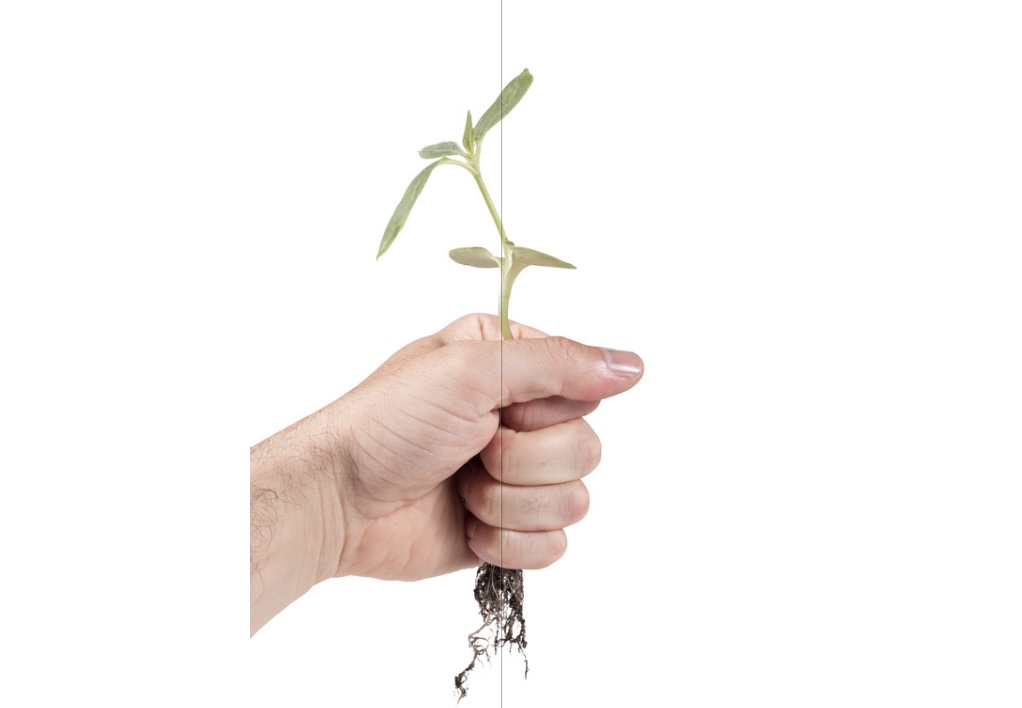
While addictions and coping mechanisms feel good in the moment, they require constant hits to maintain the “feeling good” effect. There’s only ONE way to eliminate pain for good and that is as Robert Frost once said, “through.” Only one way out and that is through. It’s in. We have to accept turning inward. We can’t put off one more day where we let our emotions pile up. For some of us, the emotions reach the top and there’s no more piling that can happen. And once the piling reaches the top, the pain of pressure from so many layers ends up forcing us to respond. I think this is why many sages say that those with the most trauma and pain have an advantage? I have never seen it this way. I only see all emotional management and pain as a call to action to change and rebuild our societal structure to create an emotionally free society where everyone can thrive. As we are learning, we will be at the whim of emotional regulation and emotional management. There’s no way around it. Setting our goal to eliminate our own pain of the past and to learn how to process our emotions gives our lives direction and the hope that as we learn and develop these skills, we can experience a different reality.
WHEN FACED WITH THE CHOICE

When faced with the choice between reaching for long term emotional management or emotional processing, consider this: There is an absolute time to reach for emotional management. One of this times is when we are first learning emotional things and we have yet to reach a place in our development to understand how to process our emotions or before we even gain intellectual understanding of emotional management and emotional processing. During this time, the best course of action will be to manage our emotions. But as we grow and the longer we are on the journey, we come to find ourselves faced with the conscious choice to choose between emotional management and emotional processing. When we reach this place in our development, here is something that can help you to decide. When faced with the choice, look at emotional management and emotional processing like this: Authenticity desires you to win. Propaganda wants to win. Authenticity desires you to process your emotions and gain true emotional freedom. Propaganda desire you to manage your emotions so you stay dependent on the system. When we choose emotional management long term, we choose the same system failing billions of people every day. When we choose emotional processing, we take steps toward creating a new earth–a new world filled with conscious people with their own agency–where we are all emotionally free!
This is my hope for you, Discoverlies!
MUCH LOVE!!

 Self Discoverly